Cinnamon Loofah Soap Recipe
Make the most of your loofah harvest with this loofah soap recipe!
Loofah has an interesting reputation in the garden. (You might spell it luffa, or loofa- it’s all the same.)
It’s one of those fascinating plants that you can do so much with. And once it gets started- watch out! It might take over your garden.
My first experience with loofah was when a friend gifted me several, which she had dried for kitchen sponges.
She described how her loofah basically never stopped growing and ended up trailing out of her yard and into the neighbor’s.
They had a little more than they bargained for after planting just a few loofah seeds!
Honestly, everyone I know who grows it has so much to share, that I’ve not grown it myself (yet).
But I have plenty of loofah to use, and to experiment with. So, I started looking for more ways to enjoy this fun plant in all its spongy glory.
Reasons to Love Loofah
The biggest or most obvious benefit of using natural loofah from the garden is that it’s just that: natural plant fibers.
Kitchen and bath sponges today are usually made from plastic or foam. So, if you’re trying to avoid more microplastics, the switch to a real sponge is a good solution.
They’re also sustainable and another way to become more self sufficient.

Save seeds from each year’s plants by shaking them into a bucket after you’ve peeled your ripe loofah.
Let the seeds dry in one layer on a towel and then store in a cool, dry place until next year.
Why Loofah Soap?
On to the main feature: loofah soap. You may be wondering exactly how this recipe works.
The idea is to make a homemade soap that also gently exfoliates your skin.
And the process is actually really simple.
You’ll start with a melt-and-pour soap base. Then you’ll pour it over a slice of your loofah sponge in a soap mold.
The result is a delicious-smelling bar of soap that will also scrub away dead skin cells and leave skin soft and smooth.
Loofah is more generally used as a kitchen sponge than a bath sponge, because it can be a bit firm and scratchy once it’s dried.

But when you add the soap mixture, it makes the sponge softer and just the right texture for an exfoliating bath bar.
It’s also a great way to use up all your extra loofah, if you’re growing it this year!
Don’t forget it makes a great homestead gift, especially in the form of a fragrant soap bar.
Loofah Soap Recipe: Process
A melt and pour soap base like this goat’s milk soap base is the first step. You will cut up 1/2 pound and melt it slowly in the microwave, double boiler or in a saucepan.
While it’s melting, you can cut your loofah into slices as thin or as thick as you’d like them- just as long as they will fit into your soap molds.
You will find a variety of soap molds online that you can use, in different shapes and depths.

(If you don’t have luffa of your own, you can buy it on Amazon, too.)
You can add essential oils for added natural fragrance, after it has cooled down quite a bit, but before it starts to harden.
The main thing to remember is that the fragrance can burn off if you add the essential oils too soon.
After adding the essential oils, you can stir in the cinnamon. If you’re wanting a great multi-purpose cinnamon, I love the Vietnamese cinnamon from Frontier Co-op.
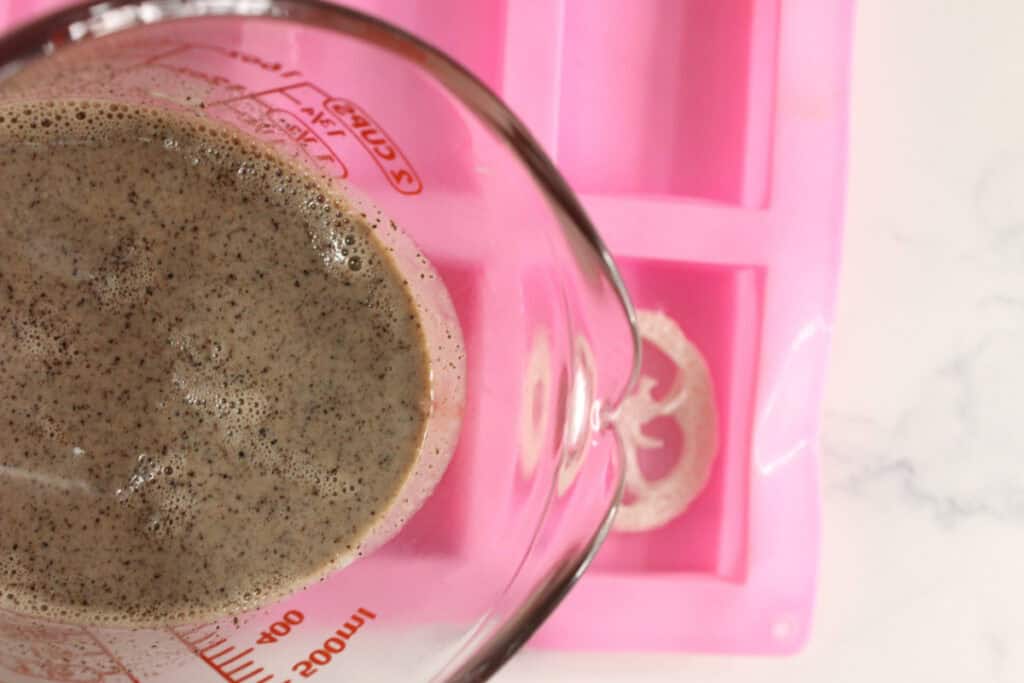
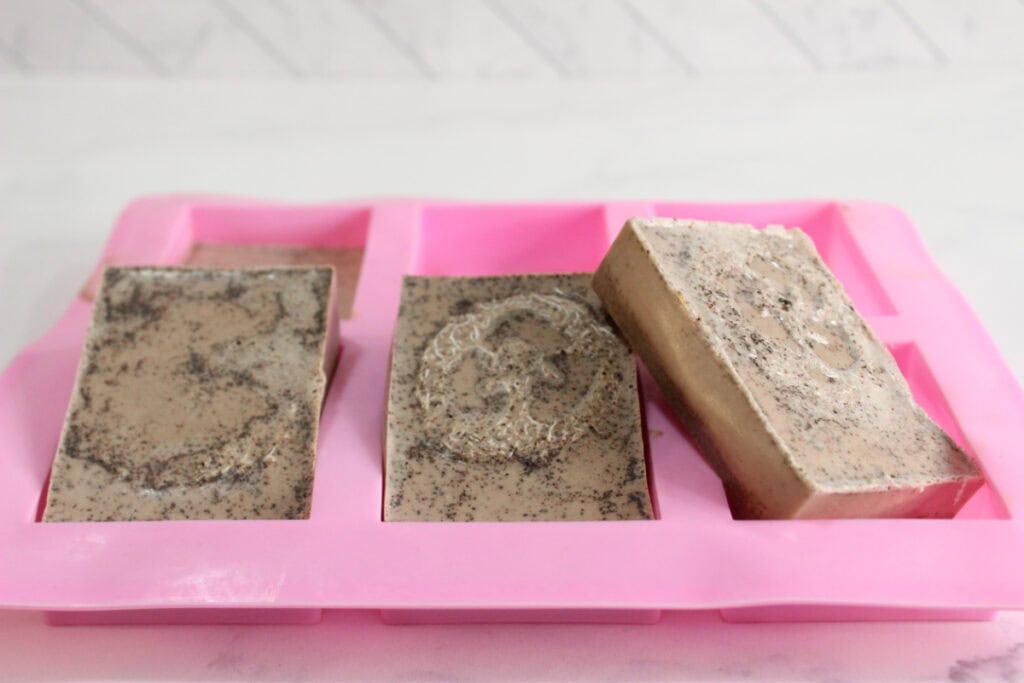
Add a slice of loofah into the wells of your soap mold and pour the soap mixture over them. It’s ok if the loofah sticks out a bit. They will also expand some as they are submerged in the liquid.
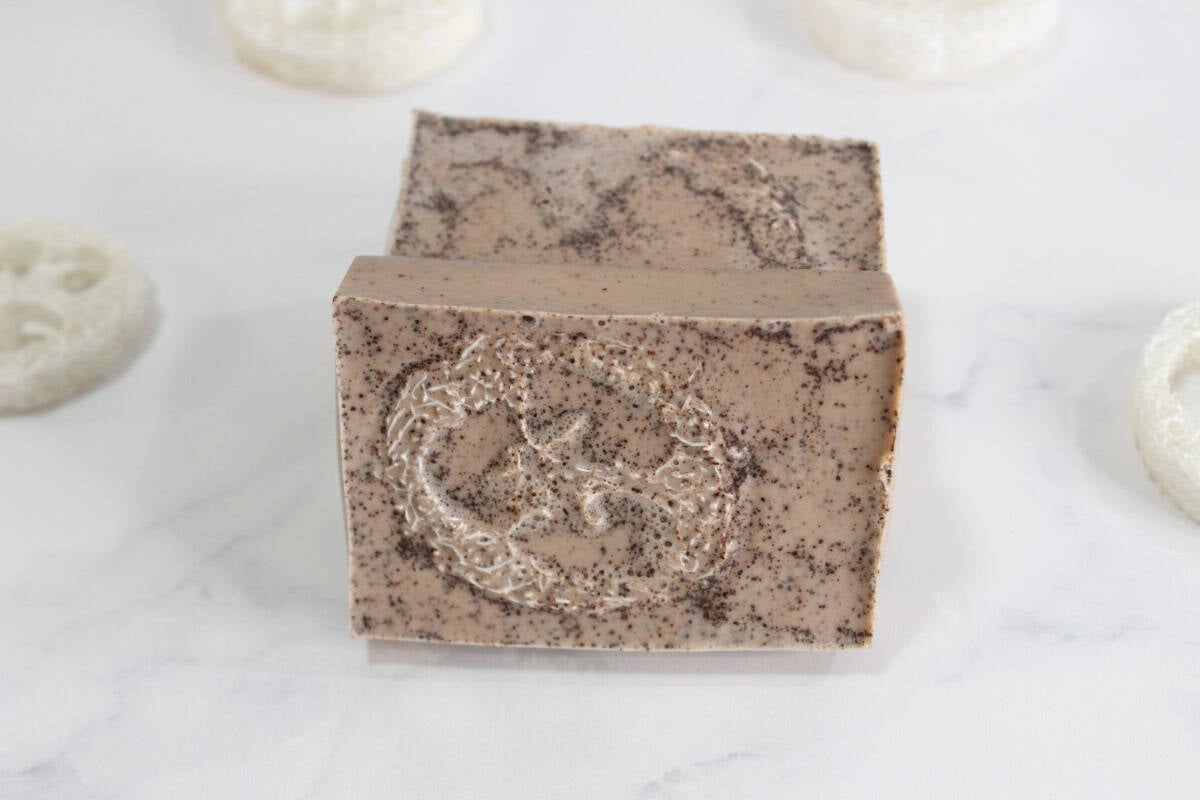
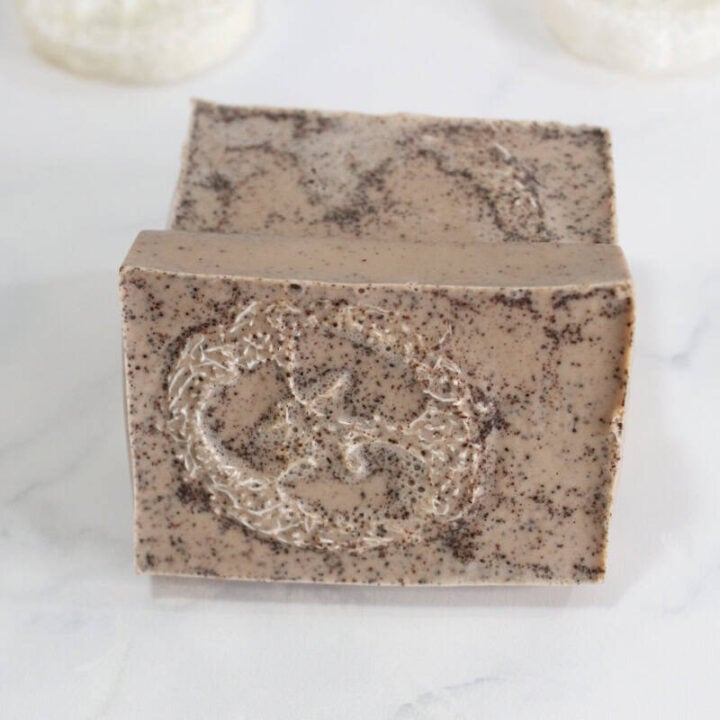
Once they harden, you will have all-in-one sponge and soap bars that also smell like dessert and give you soft skin – all without chemicals or plastics.
Let us know in the comments if you try this recipe!
Loofah Soap Bars Recipe
Fragrant cinnamon soap poured over slices of natural loofah makes a delicious-smelling soap that gently exfoliates your skin.
Ingredients
- 1/2 lb melt and pour goat's milk soap
- 15 drops of essential oils such as cinnamon, orange, clove (optional)
- Loofah, sliced (1 per soap)
- 2 Tablespoons ground Cinnamon
Instructions
- Cut soap base into small squares and melt on low temp in the microwave or in a saucepan on low heat.
- While soap base cools, cut loofah into slices to fit into the soap molds (1 per mold).
- When soap base starts to cool (but before it starts to harden), add essential oils such as cinnamon, orange, or clove, if desired for a stronger scent.
- Add the cinnamon and stir well.
- Pour soap mixture over each slice of loofah in the soap mold. Cover them well, but it's ok if they stick up above the mixture some. They will also expand as they absorb the liquid.
- Let cool overnight, then remove from molds.
Recommended Products
As an Amazon Associate and member of other affiliate programs, I earn from qualifying purchases.


You might also like: