Zone 7 Vegetable Garden: My Top 10 Favorite Things to Plant Every Year
Wondering what to plant in your zone 7 garden this year? Here are some of my longstanding favorites.
It’s spring, and I’m deep into seed-starting and up-potting.
I usually start going through my seed stash after Christmas, taking inventory and deciding what the garden should look like this year.
(Or rather, what I *hope* it will look like.)
Through the years, I’ve tried and failed at a lot of vegetables! Experience is the best teacher.
At this point, I’ve narrowed down my top 10 garden plants that I know I’ll plant every year. (In addition to many others that come and go.)
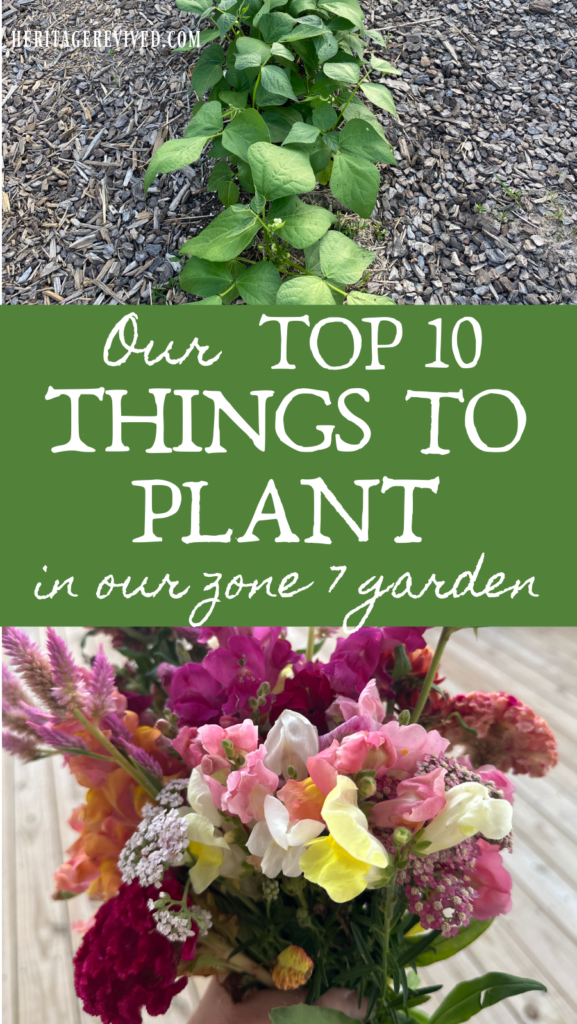
In this post, I’m sharing about my personal “proven winners” in the garden, and some tips for how to pick yours.
This site contains affiliate links to products. As an Amazon associate, I earn from qualifying purchases. Please read my disclosure for more info.
Choosing the right plants for your hardiness zone
I’m writing about what I’m planting in my 7a garden zone (which until recently, was zone 6b for us). It’s important to know your zone.
There are some neighboring zones where you will have good luck with many of the same plants I’m growing. The farther you are from zone 7, the more likely you need to look at planting guides for your particular zone.
The fact that we have SO many seeds available to us in our shiny seed catalogs makes us think we can plant just about anything. And technically, we can…but we’ll often be disappointed.
Honestly, for me, I go for the easy wins whenever possible. I try to choose plants that I already know grow well here, and I don’t branch out as much as I used to.
You might notice that squash plants like zucchini are NOT on my list. At this point, I have ceded squash to the powers-that-be, as I am just NOT dealing with squash bugs anymore.
(I don’t use pesticides either, so it is what it is.)
Garden reality: Once you’ve had a vegetable garden for about 3 to 4 seasons, you will also know what works and what just isn’t worth your time!
Zone 7 gardening challenges (Missouri Ozarks)
I am right on the Zone 6/Zone 7 border in southwest Missouri. Here, our biggest challenge is the unpredictable spring and fall weather.
Actually? Even summers can be pretty unpredictable. Last year we had a ton of rain in the summer with cooler temps, which is unusual even for wacky Missouri.
But spring and fall are even trickier. This past year, for instance, we had a VERY warm winter with very little snow, which was followed by an unseasonably warm spring.
We had multiple weeks with summer-like weather in January, February, March and now April, in the 70s and 80s. (We broke 90 degrees- a record- on the last week of March!)
In between these balmy days we’ve had low daytime temps and hard freezes as low as 15 degrees at night. Huge temperature swings (like a 40 degree rise or drop in one day) are not uncommon here.
Take a look: The Everything Garden Planner: A Printable Guide for Maintaining and Planning your Vegetable Garden, Trees and Perennials.
It seems like EVERY year is completely different in my zone and it makes it hard to know what kind of gardening season we’ll have – or when to plant.
Hail, high winds (and sometimes tornadoes) are also a threat which wreaks havoc on greenhouses in the spring, not to mention seedlings and established plants in the fall.
And I haven’t even touched on garden pests! Besides squash bugs, we have tomato hornworms (tobacco worms), aphids, grasshoppers, and many others to contend with.
A lot of my plant-choosing has to do with what is the hardiest and which pests I can manage organically. In my case, I mostly manage them by interplanting herbs that deter these pests.
When to plant in Zone 7
The rule of thumb is to wait to plant tender seedlings out after the first frost, which by my zip code is April 22.
This would include tomatoes, peppers, green beans, squash, cucumbers, pole beans- anything that thrives in the summer temperatures.
Note: If you’re planting cold-weather vegetables like broccoli, kale, spinach and cabbage, you can definitely put these in the ground a few weeks before the last frost (but follow your seed packet instructions).
Just be prepared to cover seedlings if a hard frost is predicted, and shade those cool-weather crops from the sun when those temperatures climb too high.
Potatoes can be planted before the last frost. In my zone (7a), the rule of thumb is to plant around or just before St. Patrick’s Day.
Good things come to those who wait
A lot of folks in my zone get excited and plant the whole summer garden too early when we have unseasonably warm weather before the last frost – sometimes weeks before.
I get it. It’s SO tempting.
For me, it’s not worth the risk of losing all my seedlings that I work so hard to start and keep alive!
Read next: Beginner Tips for Starting Seeds Indoors
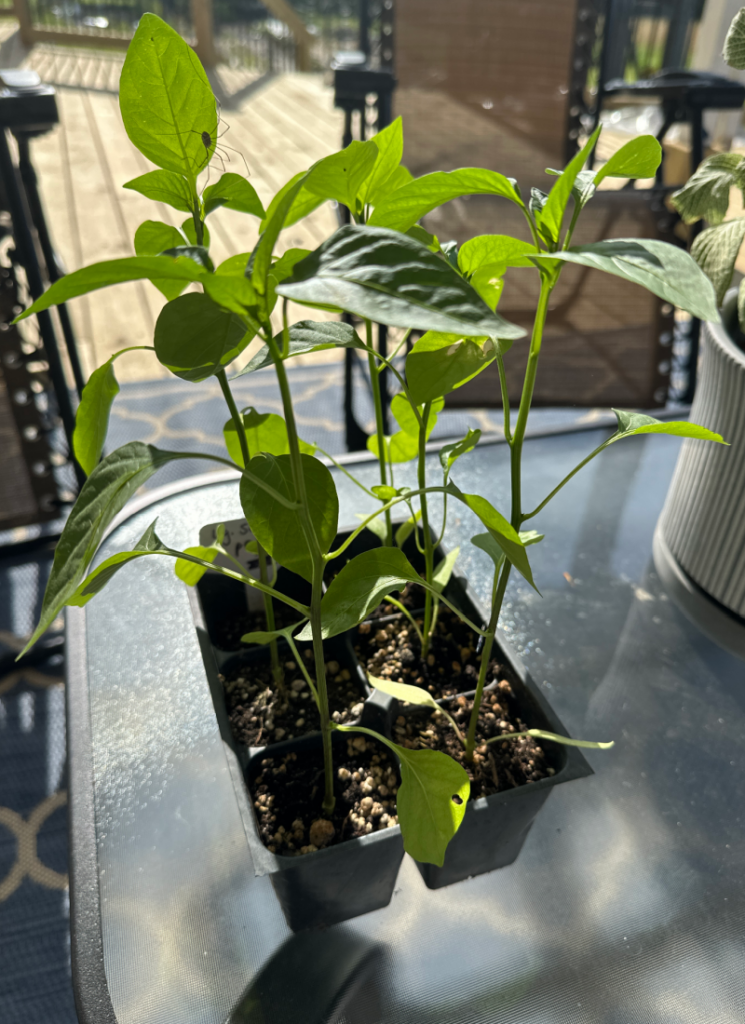
Also: just because you can plant them out and they might do ok — with rapidly fluctuating spring temps, your summer vegetables can easily become stunted.
I’ve found that waiting to plant tomatoes / warm weather seedlings until the first few weeks of May is about perfect in this zone. I rarely plant them out in the garden prior to the last week of April.
The ground needs time to warm up, too. Most veggies are happier when they have more consistent temperatures, in general.
My general rule of thumb in zone 7a is: When in doubt: wait a week or two to plant those summer veggies.
You will usually find your plants will produce just as soon as those that were planted earlier, and your plants will be happier and healthier.
Fall vs. Spring Planting
Spring in Zone 7a can often be too wet, making it hard to direct-sow things like Spinach, lettuce and carrots which can easily get washed away.
If this is the case for your spring weather, remember that fall can be a great time to start again and take advantage of waning temperatures.
Follow and plant seedlings out according to the first frost dates (this year, October 16th). And keep track of dates to start seedlings indoors in late summer, such as broccoli and cabbage.
The 10 Vegetables we’re (always) planting in our Zone 7a Garden
So now that we’ve talked Zone 7 garden planting challenges and WHEN to plant, WHAT exactly do I always plant? Here’s the list!
1| Green Beans (bush variety)
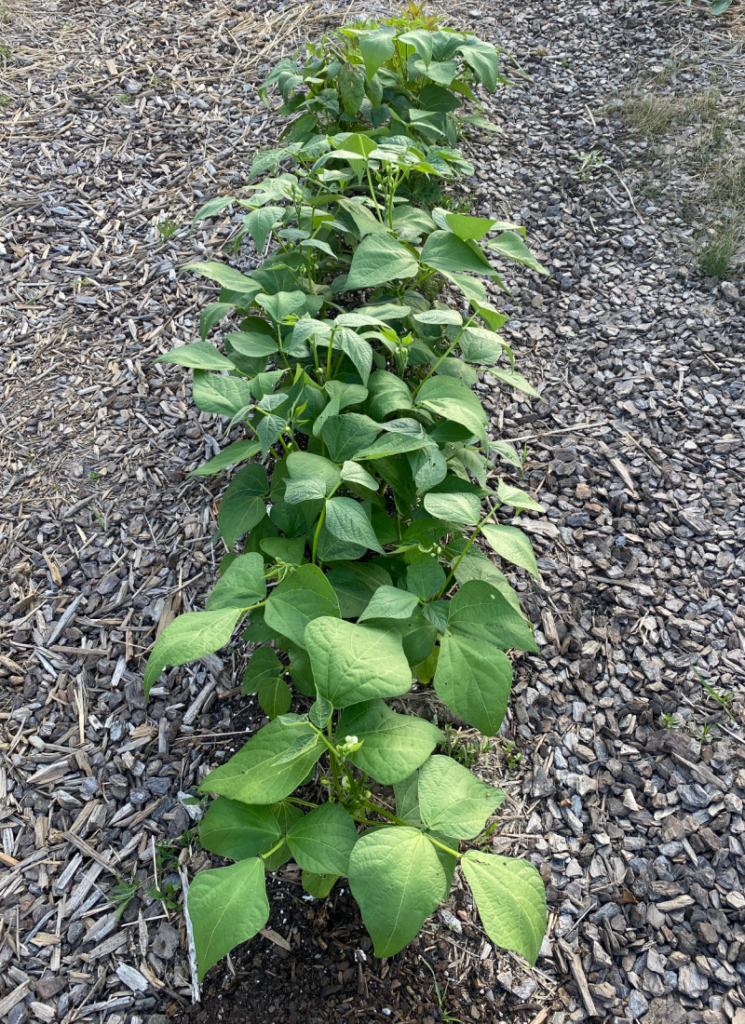
These are one of the EASIEST things to grow! They do well for me by direct-sowing starting after the first frost, and succession planting every few weeks through mid-summer.
Then I plant a few more successions as temperatures start to drop in September.
Bush beans are my favorite because they don’t require trellising, and they are typically more tender than pole beans.
I prefer them flash-frozen after a quick blanching, for crispy stir-fried green beans later. Yum.
This year, we’re also trying these Golden Butterwax Beans that appear to grow as easily as our green variety. (Will report back!)
*When in doubt, find other varieties of the SAME type of vegetables you already know how to grow, and that have performed well for you.
2| Black Cherry Tomatoes
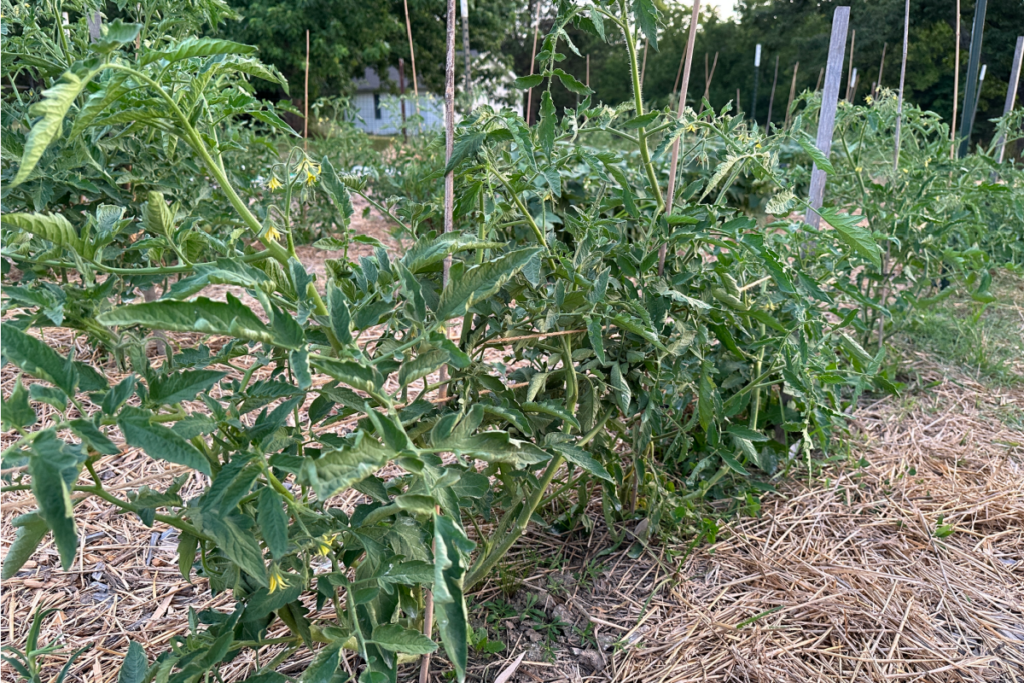
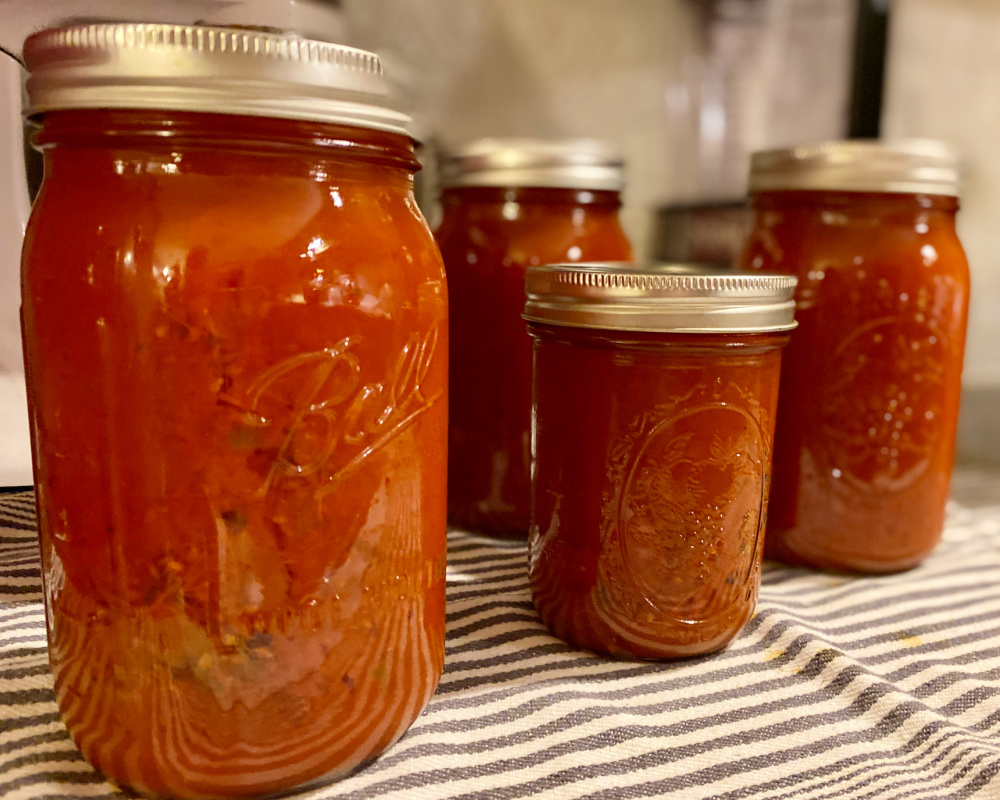
Amish Paste tomatoes have been the easiest to grow and for making and canning homemade tomato sauce.
But my favorite “eating tomato” by far is the Black Cherry tomatoes grown from seed from Baker Creek Seed Co. I start these indoors in February and they take off quickly!
They grow larger than any other tomato plants I grow. They are incredibly prolific and will produce LOADS of good-sized cherry tomatoes, earlier and later in the year than all other varieties of tomatoes.
I find they’re more reliable in the sense that they don’t grow large enough to crack (I hate losing a big juicy tomato!).
And because there are SO many of them, even if a hornworm devours a branch, you’ll still have plenty left.
I slice these into thin rounds and dehydrate them all summer long. They are the best on salads and pastas, any time of year.
I’ve also thrown these little gems into pasta sauce for canning – seeds and all.
3| Swiss Chard (perpetual spinach)
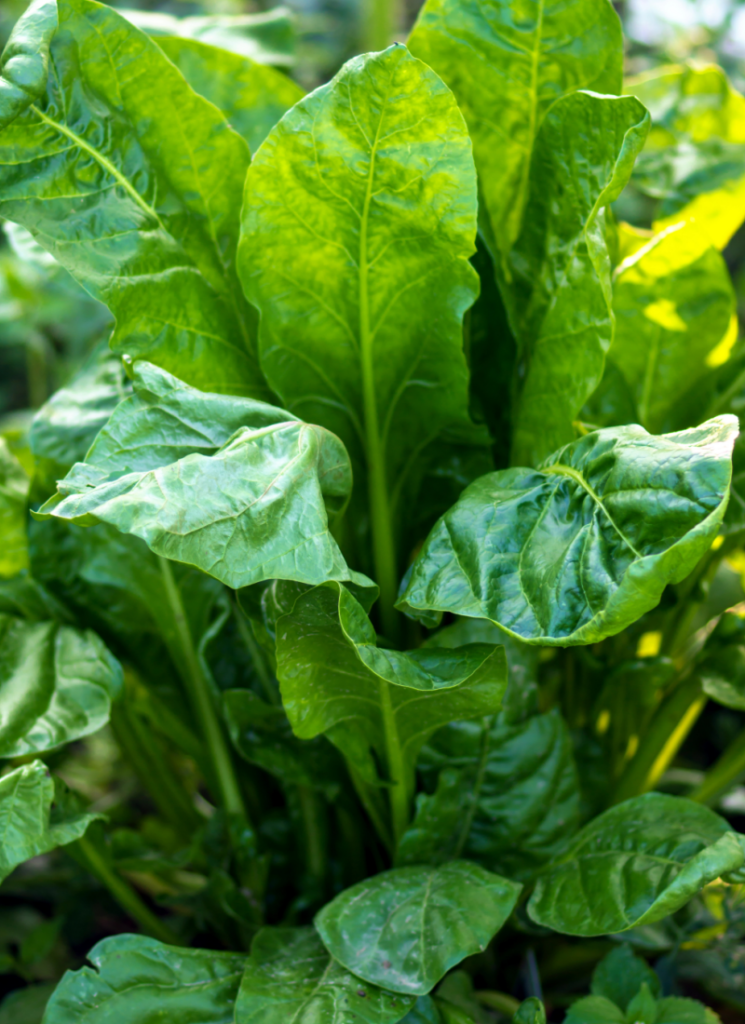
Swiss chard, particularly the Perpetual Spinach, is another favorite. I can put seeds directly in the ground a few weeks before the last frost, and they will grow well into the fall.
The Perpetual Spinach variety has a better flavor than other chards I’ve tried – more like Spinach (hence the name). If you cut them when they’re small, they’ll continue to grow and will taste more tender than the larger leaves.
We use them as a salad, as a wrap (the larger leaves), chopped thin for tacos, thrown into soups, smoothies and more. Unlike lettuce, you can also blanch and freeze them.
If you mulch Perpetual Spinach with straw to protect the plants, you will likely have them return next year.
4| Carrots
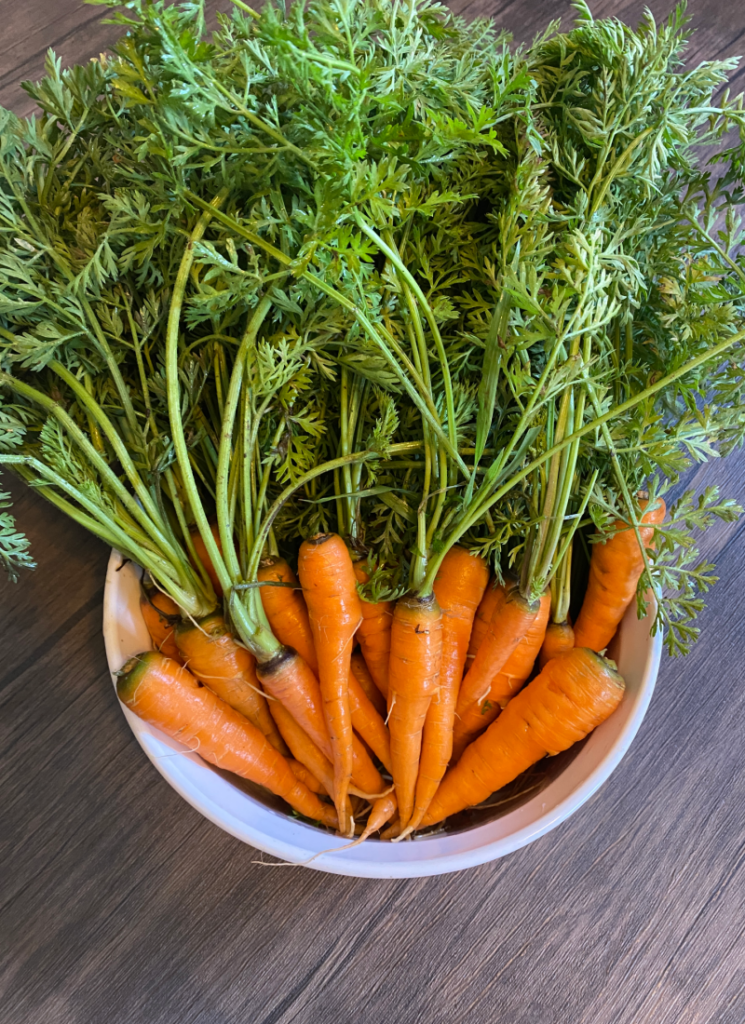
Carrots are a little tricky at first. They need to be thinned after they start sprouting, and they usually need a little compost/manure to reach their potential.
In my area, it’s hard to find quality, organic carrots, so this is my main motivation for planting them. I’m always trying to learn more about how to get the most out of my carrot harvest.
My kids are huge fans of harvesting carrots, which is another great reason to grow them.
Carrots, like other root crops, are one of the few veggies that will keep longer into the winter (in the fridge).
Of course, they’re also great canned, fermented or frozen.
Here’s a book I’ve enjoyed, to learn more about fermenting.
5| Potatoes
Normally, we plant potatoes in the Spring (around St. Patrick’s Day).
My favorite potatoes to grow are Yukon Gold or yellow potatoes. I typically just buy a bag of these organic potatoes from Azure standard for my “seed” potatoes.
After putting them in a cool, bright place to sprout (a process called chitting), I cut them with an eye or two on each piece.
Then they are left to dry or “scab over” for a few days before planting.
In my zone, potatoes planted in March are usually ready to harvest in late summer, around July.
6| Garlic
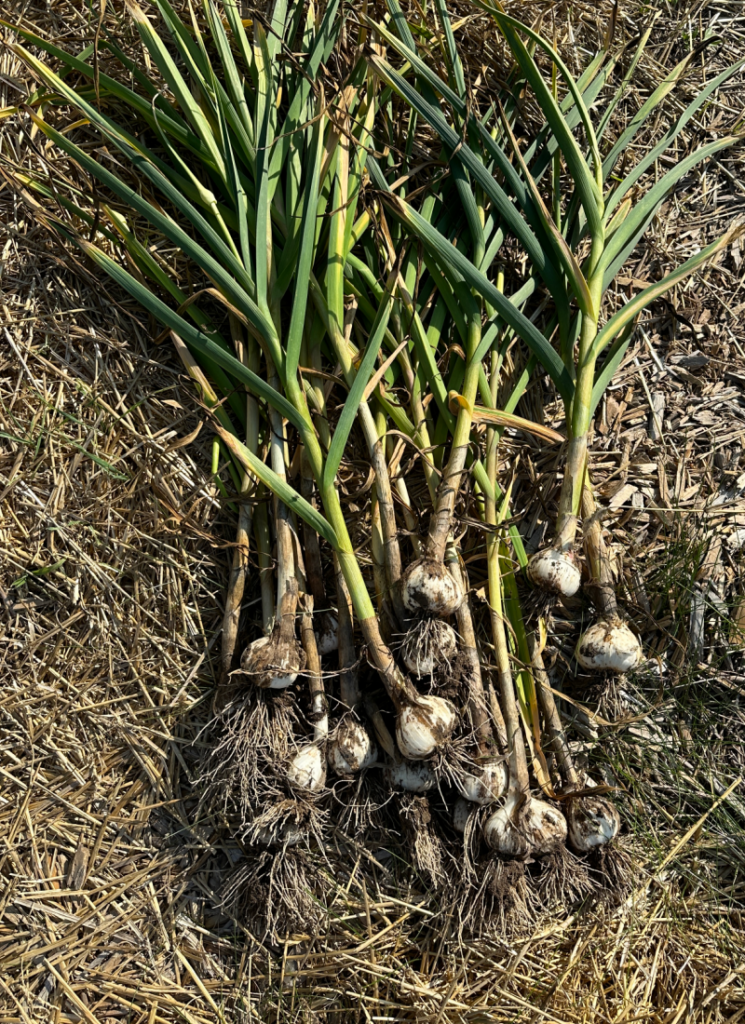
Our garlic will go in the ground near the end of October, and be harvested in June or July next year.
By hanging my garlic in mesh bags in my pantry (you just need a cool, dry place), I can keep them fresh from summer harvest until the October planting each year.
With this method, you can buy garlic once, save the biggest cloves to re-plant and (virtually) never buy garlic again.
7| Lettuce
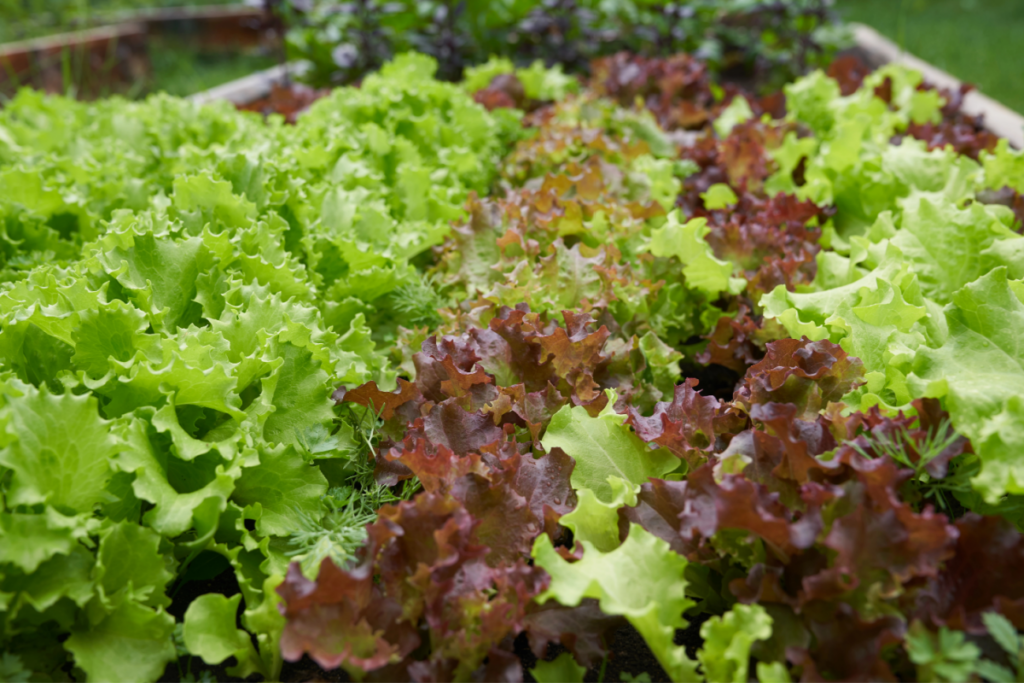
I like to grow all kinds of lettuce for salad greens and sandwiches.
Leaf lettuces are the way to grow if you want to cut a little here and there for your daily salad, rather than growing full heads of lettuce. Look for seeds labeled “salad mix” or “salad greens”.
I’ve heard of extending the growing season for lettuce (which is typically a cool weather crop) by only letting it get a few hours of morning sun and then covering with a bed sheet the rest of the day. This is something I’ll definitely be trying this summer!
8| Peppers
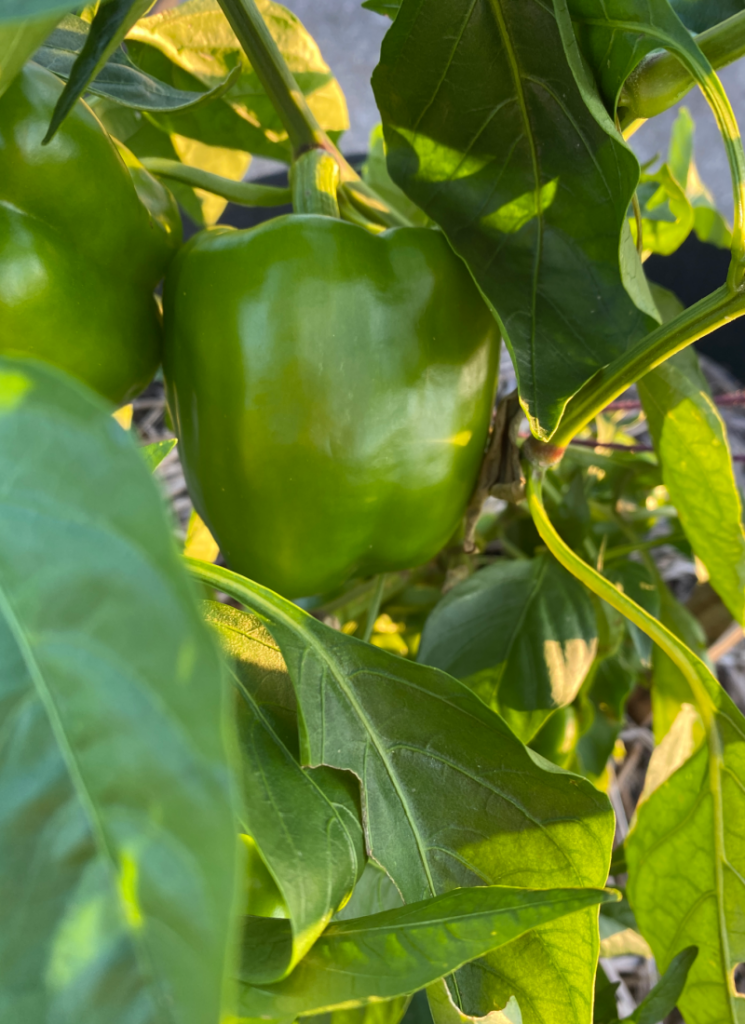
Peppers need an early start (I start seeds in late January/ early February), but once they are finally in the ground and temperatures start to climb, they take off.
We like them the most for fresh eating in stir-fry, as stuffed peppers or in fajitas. But I also dehydrate and freeze them after cutting them into rounds. Those can be used in soups and chili later on.
A few that do well for us are basic bell peppers, banana peppers, and Anaheim peppers (those are the most prolific!).
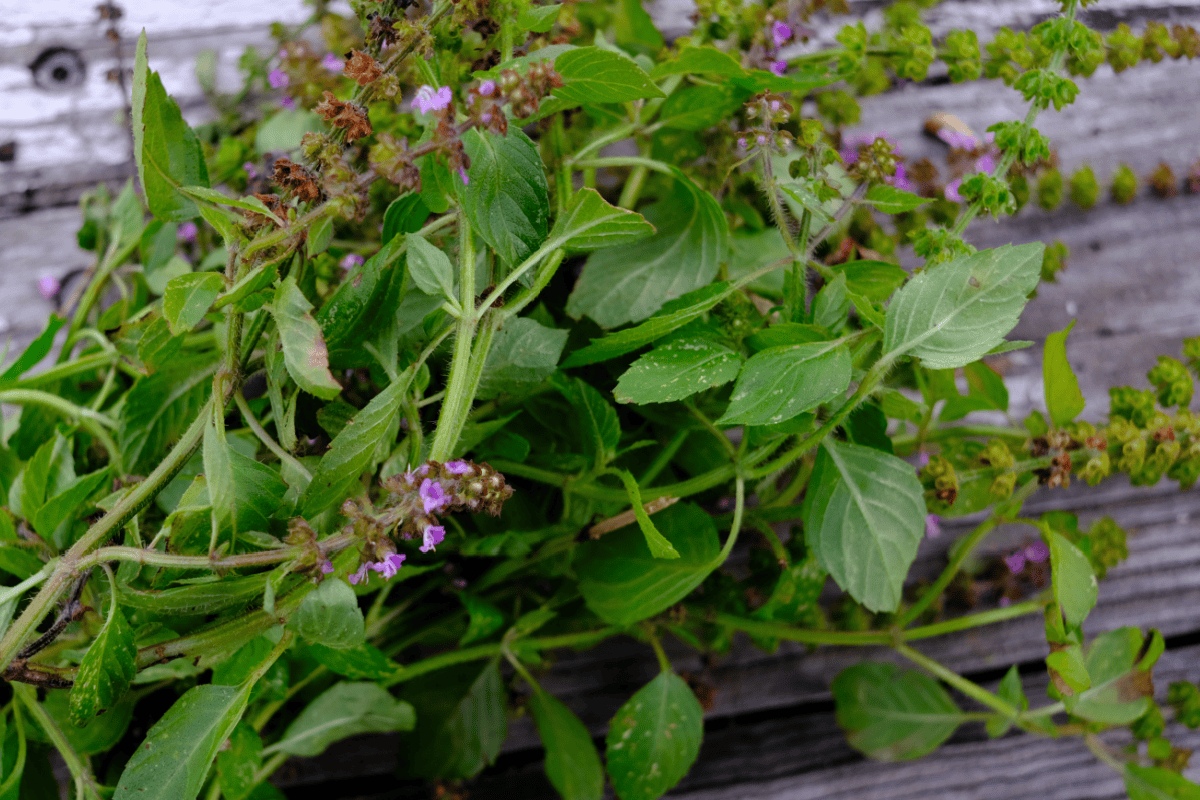
9| Blue Spice Basil
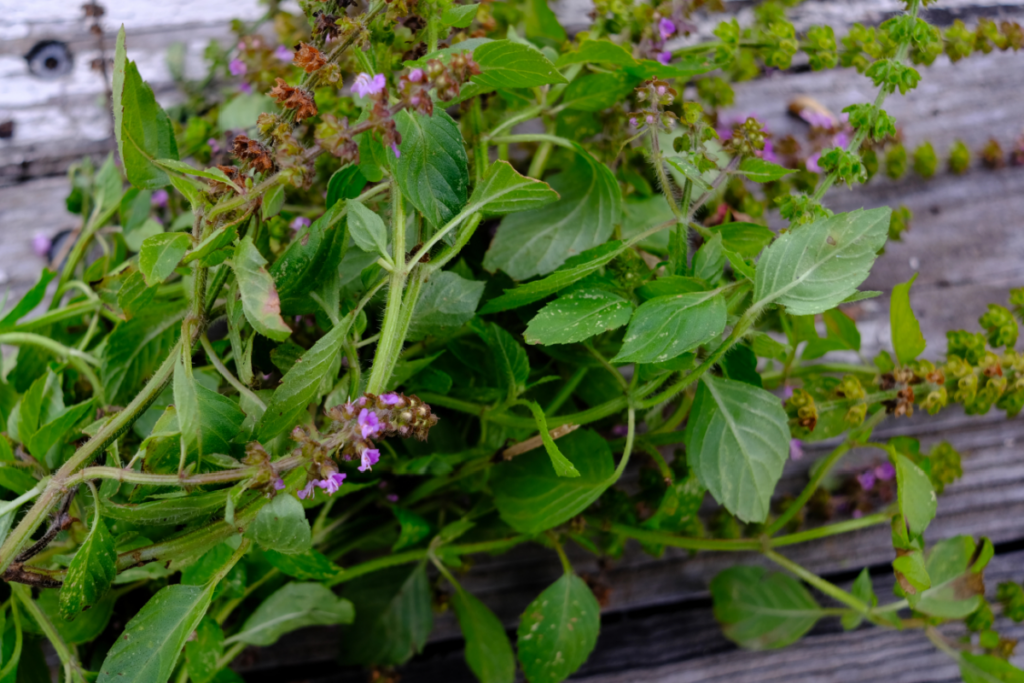
If you’ve never grown this variety of basil, you will want to try it!
Blue spice basil has a slightly floral flavor, and a very distinct taste. We love it in spaghetti sauce; a little goes a long way after it’s dehydrated.
More than that, the plants are beautiful to look at as they produce long spikes with bright purple flowers that will remind you of Salvia.
You can smell its pungent aroma as you walk through the garden, which is why it’s also a great pest deterrent.
Blue spice basil plants have seeds that are easy to save if you let the flower stalks dry out before cutting them. Be careful though, they will re-seed all over the garden the following year — although the plants are easy to remove.
10| Snapdragons
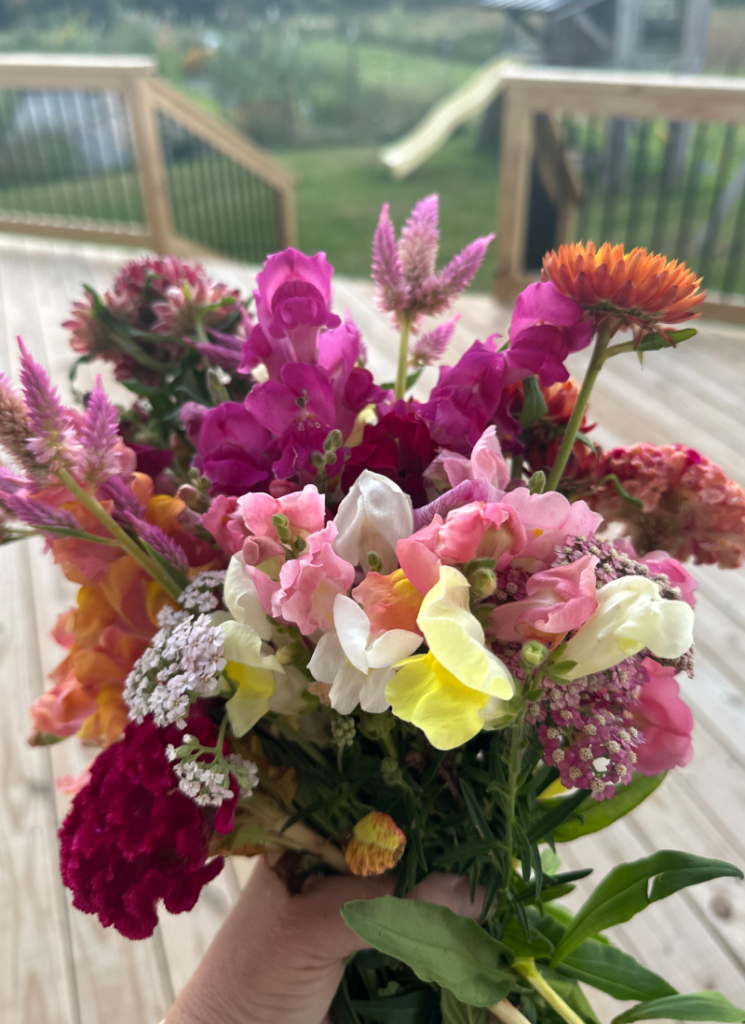
Snapdragons just seems to be a staple for my garden. Like the basil blooms, they are a wonderful pollinator-attractor.
While I love my marigolds, zinnia, yarrow, calendula…there is just something special about these delicate blooms.
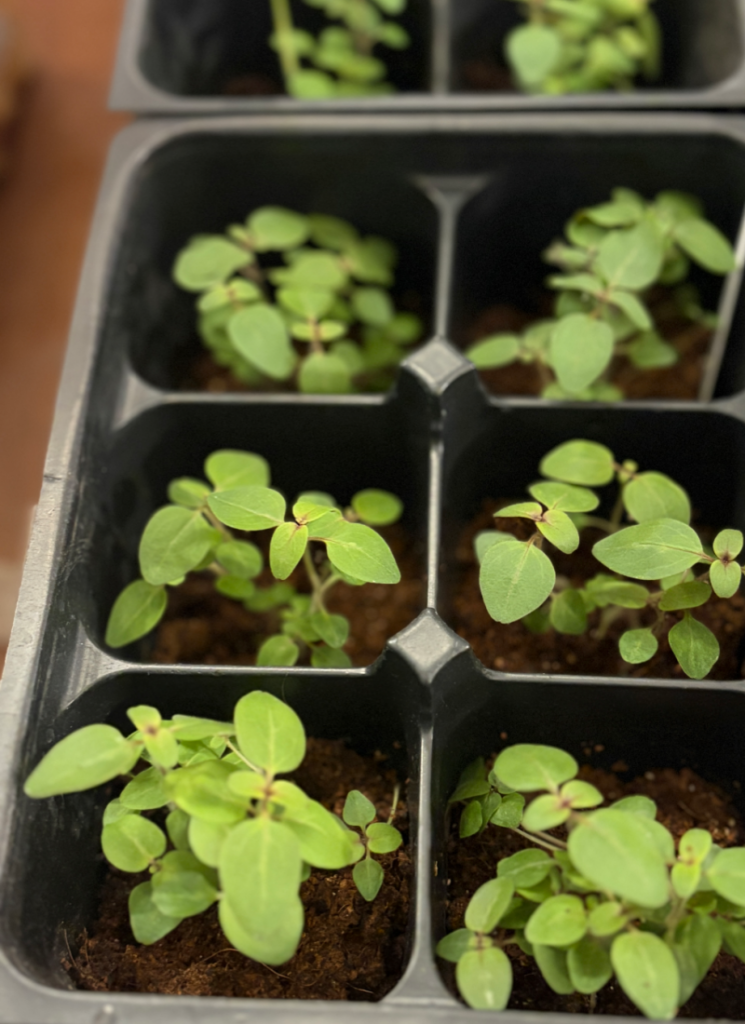
Snapdragons are another type of seed that I have to start early indoors (January) as they are slow getting started.
But even small seedlings take off quickly outdoors and make beautiful blooms. I like to find new varieties to try out each year.
What are your Zone 7 Garden Favorites?
I grow a lot more in my garden besides these, but this list pretty much sums up the plants I know I’ll be growing, year after year.
Your choices will be (and should be) determined by what YOU and your family like to eat and what you enjoy.
Also, grow what you can preserve, so you can enjoy your gardening efforts year-around.
So, what are your non-negotiables in your garden? I’d love to hear about it! Drop a comment below.
You might also like:
How to Fill Raised Garden Beds Cheaply
How to Preserve Basil for Winter
Beginner Tips for Starting Seeds Indoors
Top 8 Beginner Gardening Mistakes to Avoid
Best Direct-sow Plants for Late Summer