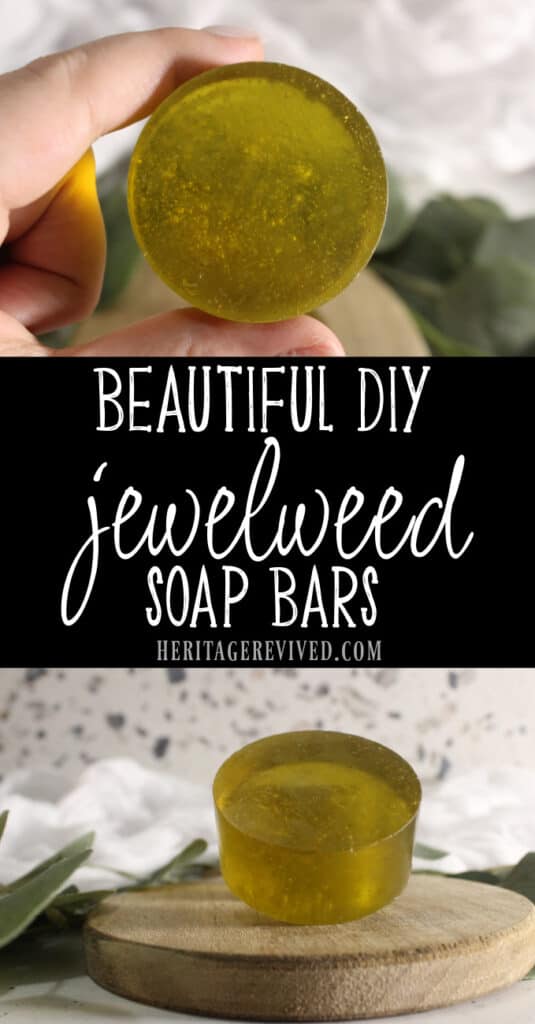
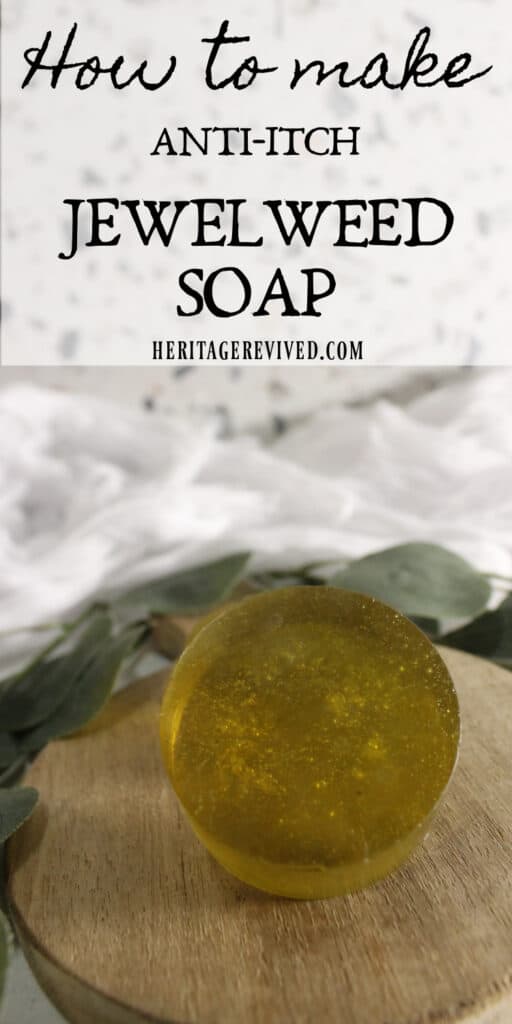
How to Make Jewelweed Soap: A Powerful Anti-itch Remedy
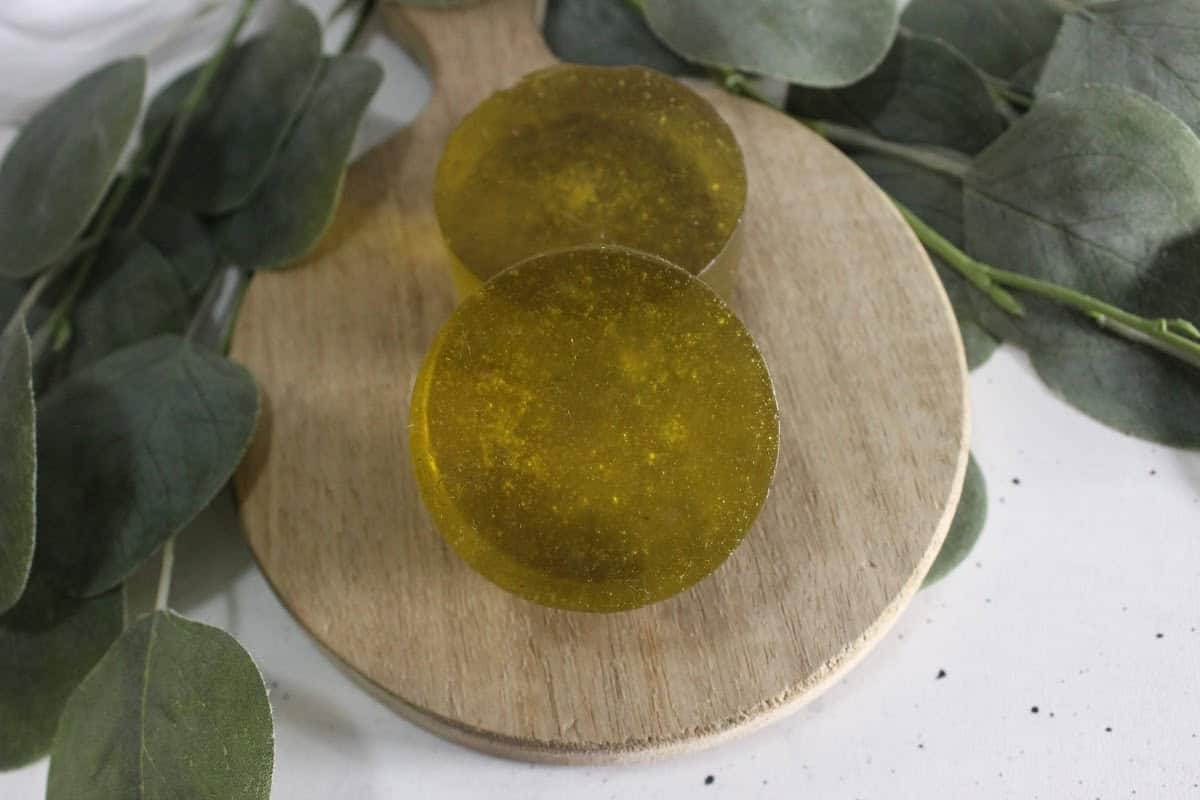
This beautiful soap contains what might be one of the most underrated medicinal plants.
Jewelweed: it goes by many names, including spotted touch-me-not, orange jewelweed and its scientific name, Impatiens capensis.
If you happen to go hiking in the woods or around damp, shady areas, it’s probably a “weed” you’ve overlooked more than once.
Once I found out about its medicinal properties, I knew it was a plant I should start paying attention to.
After all, as the saying goes- a weed is just a plant growing somewhere it’s unwanted. The more I learn about so-called weeds, the more I appreciate them!
In this recipe, we’ll use leaves from the jewelweed plant for a unique anti-itch remedy.
This site contains affiliate links to products. As an Amazon associate, I earn from qualifying purchases. Please read my disclosure for more info.
The Beauty of Jewelweed: Uses and Benefits
You can recognize Jewelweed in the wild by its beautiful blooms. In our growing zone (7A), it’s in bloom from about June to October.

It has weak, watery stems similar to succulents, and oval-shaped, coarsely-toothed leaves about 3-1/2 inches in length. When these leaves are wet, they give off a “jewel-like” appearance, hence its name.
It’s the leaves that hold the skin-calming properties we’re after in this Jewelweed Soap recipe.
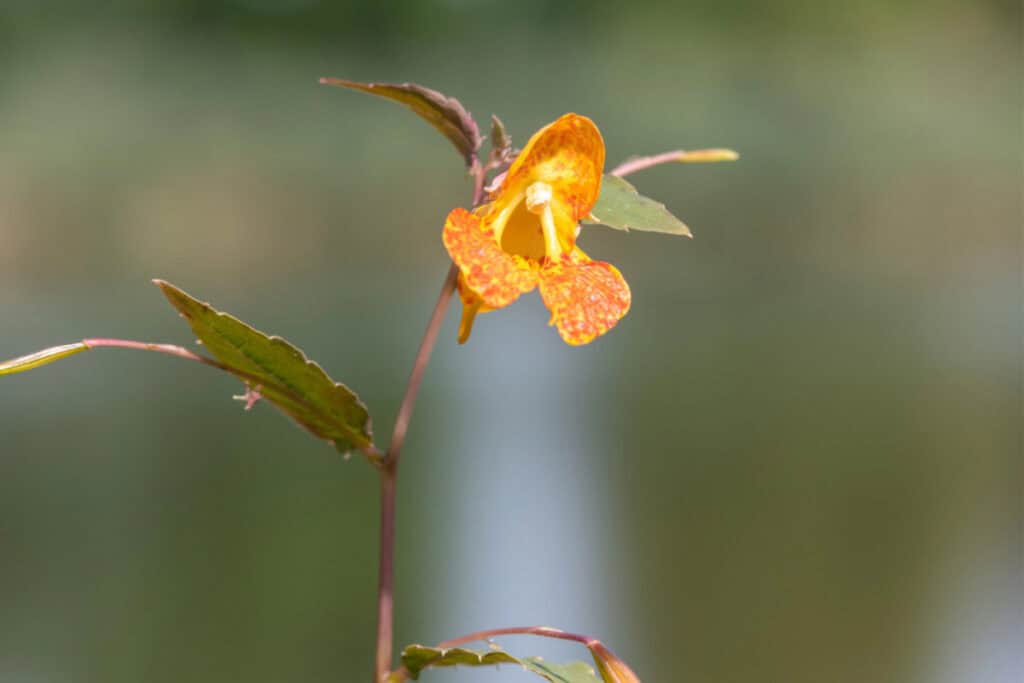
Native Americans (and others) were known to use these leaves to combat the irritation from a variety of sources:
- Poison ivy
- Stinging nettle
- Poison oak
- Hives
- Bug Bites
- Chiggers
The sap from the plant has also been said to have antifugal benefits and has been used to treat athlete’s foot.
The best time to harvest the leaves is generally mid-summer. The plants will continue to bloom until the first frost, though.
Making Jewelweed Soap
The tricky thing about making this soap might be making it while it’s fresh, as it will retain the best color by using fresh leaves.
However, you can buy or make dried jewelweed leaves and still reap its many advantages.

The great thing about making jewelweed soap is you only need a few materials to make a few bars. And then you’ll have it ready for the next time you encounter some of nature’s worst irritants.
This recipe makes approximately three 4-oz soaps.
Soap process
I love how simple these soaps come together. The first step is cutting up a glycerin melt-and-pour soap base into small squares.
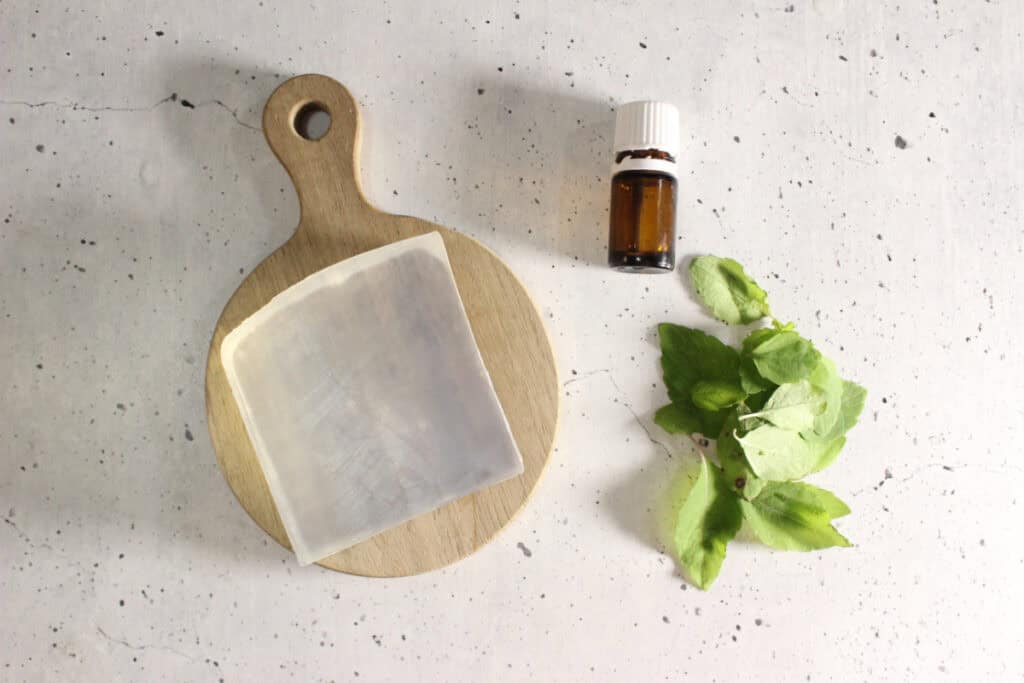
You’ll then add the jewelweed leaves along with the soap squares to a heat-safe bowl or top part of a double boiler pan.
Slowly infuse the jewelweed leaves in the soap base on low heat for a few hours. It should turn the mixture a nice green color.
After removing from the heat, you can let it cool slightly, then strain the leaves.
Next, you can add any essential oils you like. Oils such as lavender, peppermint, tea tree, chamomile and eucalyptus oil can boost the anti-itch benefits of this soap.

After stirring in the essential oils, pour the mixture into your soap molds and let cool overnight or until set.
See recipe card below for printable instructions.
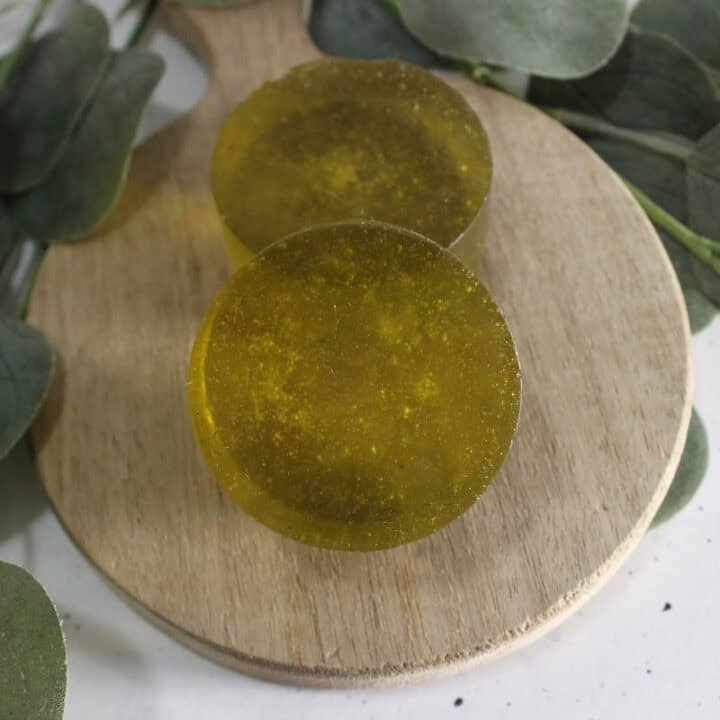
How to Make Jewelweed Soap (Anti-Itch Remedy)
Beautiful jewelweed leaves have powerful anti-itch properties in this simple infused soap.
Ingredients
- 1/2 to 1 cup jewelweed leaves (fresh), or approximately 1/2 cup dried leaves
- 1/2 lb melt and pour glycerin soap base
- 10-15 drops essential oils, if desired (Lavender, peppermint, eucalyptus, chamomile, etc.)
Instructions
- Cut 1/2 pound of glycerin soap base into small cubes and add to a heat safe bowl, or top part of a double-boiler pan.
- Add freshly washed and dried jewelweed leaves (or dried leaves) to the bowl or pan.
- Let the leaves infuse in the oil on low heat for about two hours, until the mixture turns a nice green color.
- Remove from heat and let cool slightly (but not harden).
- Strain and discard the jewelweed leaves.
- Add essential oils (optional). Lavender, chamomile, eucalyptus, peppermint and tea tree oil are common oils that are also known for soothing irritated, itchy skin.
- Pour soap mixture into silicone soap molds and let harden overnight or until set.
Recommended Products
As an Amazon Associate and member of other affiliate programs, I earn from qualifying purchases.


You might also like: